
in here, we're all compromised
watching Boogie Nights in Britain, 2026

Sometimes, by virtue of having a massive hole in your cultural knowledge, you get to see a movie at a ludicrously late point in your life, and it hits you like a ton of bricks. This is what happened to me last weekend, watching Paul Thomas Anderson’s Boogie Nights at my beloved Glasgow Film Theatre.
It is such an unbelievably good film that I’m baffled so many of its actors distanced themselves from it or latterly decried it (especially Mark Wahlberg, whose filmography since has been patchy, to be generous). Yes, it’s about the porn industry in the late 1970s and early 80s, and society generally is extremely pious and sanctimonious about anything that dares cover sex, but there is much more to Boogie Nights than there is to, say, The Wolf of Wall Street, which shows similar levels of decadence to this film, and arguably glorifies it, whereas Boogie Nights does not hold back from showing the underbelly. I don’t hear Leonardo diCaprio ‘asking god for forgiveness’ playing Jordan Belfort, a character whose comeuppance is distinctly less harrowing and less memorable than the fate of Dirk Diggler.
In fact, Leonardo diCaprio apparently turned down the starring role in Boogie Nights, which he may well cite as one of his biggest regrets, but given that he turned it down to star in Titanic instead, it probably made for a smarter career move. It’s hard not to imagine the young diCaprio, already feted as one of his generation’s major talents, feeling dwarfed by an ensemble cast absolutely overflowing with genius, from the old hands to the young bucks, every single one of them turning in a career-best performance: Burt Reynolds, Julianne Moore, Don Cheadle, William H. Macy, John C. Reilly, Alfred Molina, Luis Guzmán. I only hesitate to add Philip Seymour Hoffman to this list because his part (if you’ll pardon the phrasing) is relatively minor compared to the others, and because he is so damn good in everything he was in.
For those who have remained as ignorant as me in the twenty-nine years since it was released: Boogie Nights opens in a LA nightclub in 1977, as high-school dropout Eddie Adams (Mark Walhberg) works a shift as a kitchen porter. On account of his good looks (and, after some investigation, his enormous penis) he is spotted and then recruited by pornographer Jack Horner, there with his partner Amber Waves (Julianne Moore) and their high-school-aged companion Rollergirl (Heather Graham), both stars of Horner’s films. After a fight with his sexually jealous mother when he comes home late one morning, Eddie cuts ties with his parents and moves into the Horner home, which functions as both the set of Jack’s films and a party house for the many folks related to the porn industry: Little Bill (William H. Macy), the assistant director whose wife regularly humiliates him by having public sex with strangers right in front of him; Buck Swope (Don Cheadle), the failing porn star whose love for country music is regularly mocked by everyone; and ‘the Colonel’, who finances all the movies they make. Jack Horner’s world is a place where both drugs and sex come easily, and both are used to enrich those involved. Eddie quickly adopts the moniker Dirk Diggler, progresses because of both his natural ‘talents’ and his genuinely caring manner, and falls into a situation that mirrors his home life: a pseudo-incestuous relationship with his ‘mother’, Amber, whom he fucks on camera for a living, his ‘father’, Jack, watching on.
Soon, though, ‘Dirk’ is successful enough to buy his own home, a gaudily decorated house with an enormous red car in the garage (paging Dr. Freud), and has his ambitions inflated by all the success and attention he is receiving, as well as the amoral lifestyle he and his crew enjoy. He pitches an action-focused porn series to Jack, to co-star in with his fellow actor Reed (John C. Reilly), and if there are a few overdoses and a few power struggles here and there, he chalks it up to bad luck or the natural way of things. For the first half of the movie, Dirk Diggler is on the up—and we’re right there with him, joyfully complicit in this charming decadence.
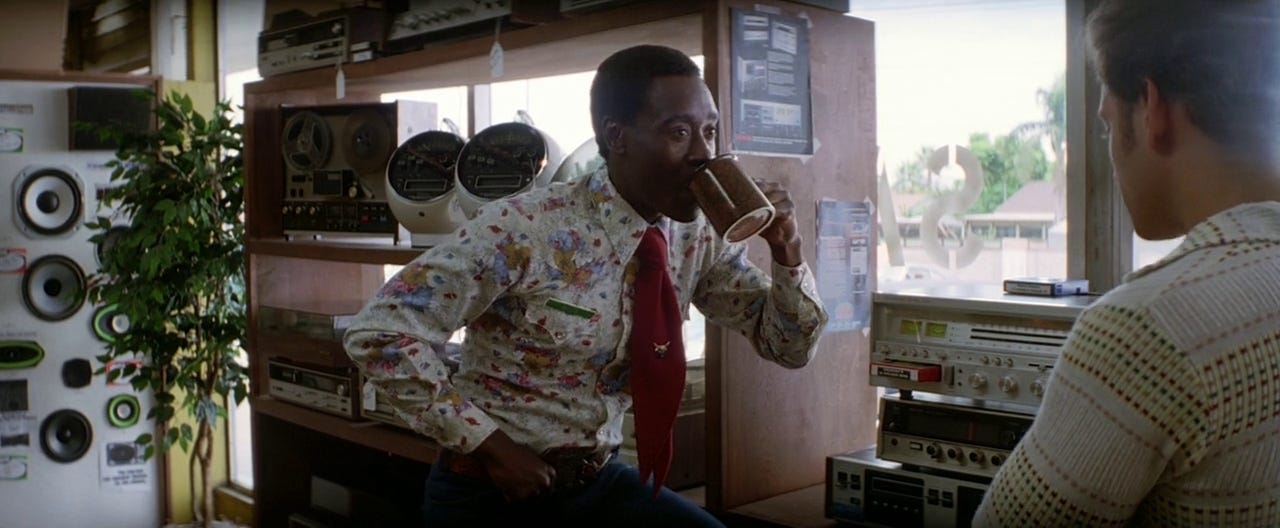
There is so much you could write about this film. About family systems theory, and covert incest, and how we unconsciously remake the very environments that have hurt us, and about the reproduction of trauma. About production, in general, and our role in it. About what happens when idealism has to meet the reality of change, and the turn from the 70s to the 80s, and the camera lens as a mirror of the eye. But what struck me most, this weekend, was the film’s exploration of what happens when you live in a fantasy version of the real world, and cling desperately to a version of the past that never really existed, refusing to deal with the real issues of your present, which you actually do have the agency to change.
The point at which the film turns, of course, is the 1979 New Year’s Eve party, which hits exactly in the middle of the movie. By the time we get here, we are aware that things are on the precipice. We have been made thoroughly implicated in the world of the film, in its excesses and its pleasures; yes, we have genuinely learned to love its characters within the first half, but we have also chosen to turn a blind eye to the young girls dragged out of parties with bloodied faces, ODing and mostly anonymous, to be never seen or heard of again. We have seen Eddie become Dirk and then get lost within the tacky expressions of new wealth. We have seen that Amber Waves is tortured by the loss of her son, kept from her by her ex because of her lifestyle. But the party is still going, and so is our enjoyment.
And so we come to the New Year’s Eve party. The end of the 1970s. Telling him how much she loves him, and how he is like her ‘baby’, Amber introduces Dirk, for the first time, to cocaine; rather than easing him in, she insists he does two lines instead of one. In another room a local theatre owner has a meeting with Jack, to tell him that film is dead and videotape is the future, and that he will have to use videotape if he wants to keep up with the future and continue to make money. And amidst this, Little Bill shows up to the party asking if anyone has seen his wife. He opens a bedroom door, and there she is, as she always is, fucking another man. Little Bill closes the door, walks out to his car, and loads up his gun. He strolls calmly back into the house, shoots his wife and his lover as the clock counts down to midnight, and shoots himself in the mouth in the first seconds of the new decade.
On the one hand, this is an unremarkable betrayal, just another in a long line of betrayals; even less public than usual. Little Bill’s cold, relaxed response to it, a murder-suicide, seems almost unfathomable: why now, after everything? But this is the film’s message: you can only push things so far. At some point, everything, and everybody, will break. And this is key to understanding every character’s arc thereafter. It is the pursuit of excess that will destroy everything. As Bill’s brain splatters across the white wall of pornographer Jack’s house, there is a hard cut to a title card: 80s.
What comes next in the movie is a subtle nod to the increasingly fascist-coded right-wing politics of the incoming decade; in a fluff documentary about Dirk from his incestuous porn-mother, Amber, Dirk and his co star Reed rebuff criticisms of the misogyny and violence of their Bond-spoof porn series Brock Landers with coke-addled scattergun responses, before Amber, in voiceover, dismisses the critiques with the following, perfectly lampooning both the right’s obsession with ‘violent’ media and the hypocrisy of their support for such violence when it is in defence of their version of American society:
If Brock Landers is slick with a gun, he does so only in the vein of good and right. Brock protects the values of the American ideal and fights for causes that instil pride in a society where morals are hard to come by.
From this point on, everything that was questionable about their world becomes downright dark. Jack receives a phone call from the Colonel, in jail after a 15-year-old girl overdoses on cocaine at his house. Jack is already preparing excuses for him when the Colonel admits that there is something else; that the police found evidence of child pornography at his house, and that it is indeed ‘his weakness’. Jack’s stunned response covers over the fact that he himself is in the business of picking minors to put into sex work. Is it a shock to him that his close friend, his literal financier, is a paedophile? Surely not. His reaction is not to the truth, but to the fact that the truth is no longer deniable. It is out there for the world to know.
Everything, elsewhere, is falling apart. Strung out on prodigious amounts of drugs, Dirk Diggler is both unruly and unable to perform, leading to a violent altercation with Jack, who says he looks too bad to shoot. Dirk leaves the Horner fold, and he and Reed embark on a truly terrible music career, stymied by the fact they have no musical talent. Amber and Rollergirl fall into extreme drug use and an incestuous emotional codependency, and Jack is forced into the seedier world of the videotape, driving Rollergirl around in a cab picking up random guys on the street, one of whom recognises her from their school days. She and Jack end up leaving the guy half dead at the side of the road, an exposed and livid Rollergirl having kerb stomped him with her ever-present roller boots.
From here, the rest of the movie is an agonising descent into the depths of their predicaments. Trying to escape the industry, Buck applies for a loan to open a store, to support his now pregnant partner, also a performer, and is refused precisely because of his involvement in porn. Dirk is replaced by a younger model, and the movies Jack makes become more violent and seedy, his ability to cast himself as a ‘filmmaker’ rather than a pornographer decreasing with each title. Amber loses a custody hearing, knowing she might never get to see her son, and is left sobbing, bereft, outside the courthouse. With Reed and a hustler named Todd, Dirk spends all his money on drugs, and is forced into the same type of sex work he first started out in, showing his monstrous dick to men for money, except now he can’t even perform, and gets beaten up by a homophobic gang for daring to try.
Now comes the nadir. Desperate for cash, Dirk, Reed and Todd hatch a plan to scam a local drug dealer, going to his palatial house to sell him half a kilo of baking soda for $5000. What follows is a masterful, genius, tension-ridden eight-minute scene—a twink lets off firecrackers at random, the dealer plays Russian roulette with a silver bullet, the dealer’s armed bodyguard tests the drugs in the background—which is so excruciating to watch that at one point I had my feet on my seat, my elbows on my knees, my head in my hands with stress, feeling possibly the worst I have ever felt in a cinema. Within this scene is nestled a near-perfect 50-second shot of Mark Walhberg’s face, in which, silently and largely unmoving, he manages to convey his character’s realisation that he has fucked up everything good in his life, has found himself completely and totally out of his depth, and might be about to be part of something that could see him killed. It is the moment at which the fantasy comes crashing into the hard face of reality, and it is truly painful to watch.
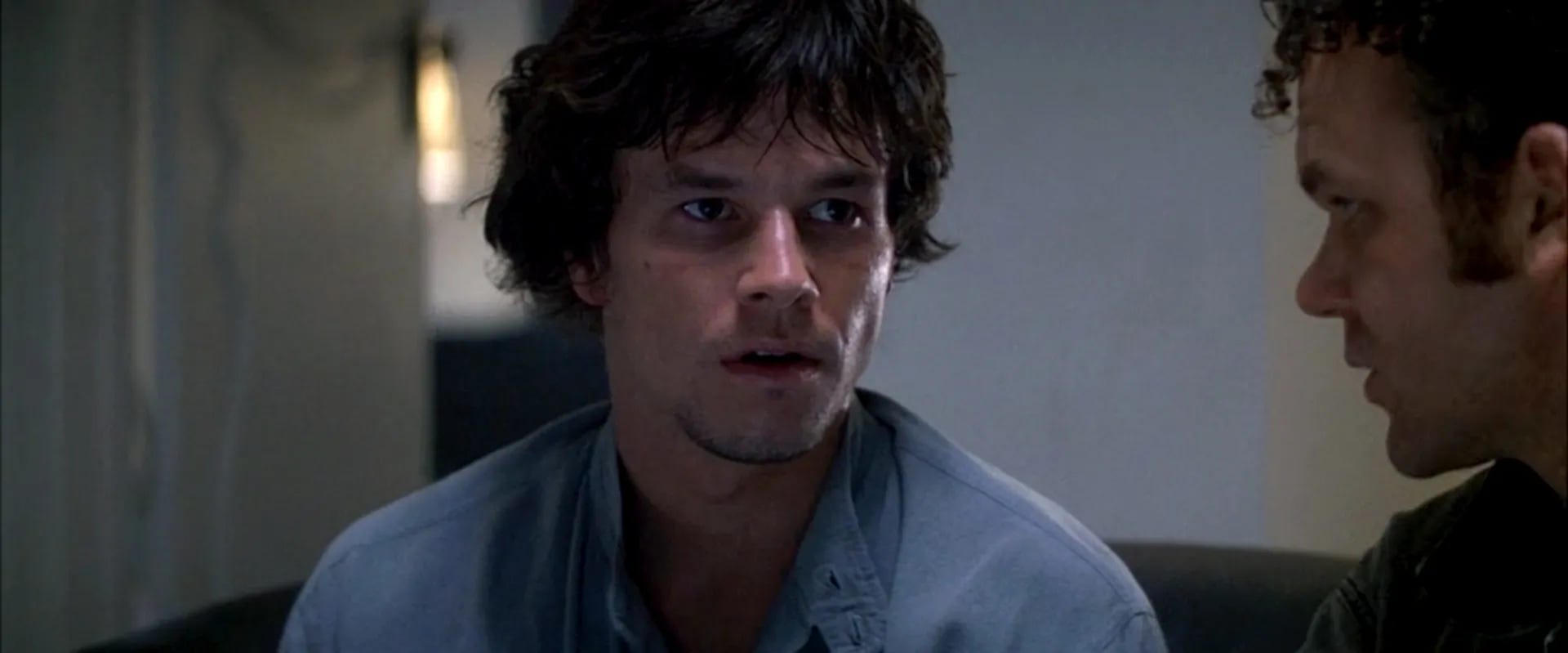
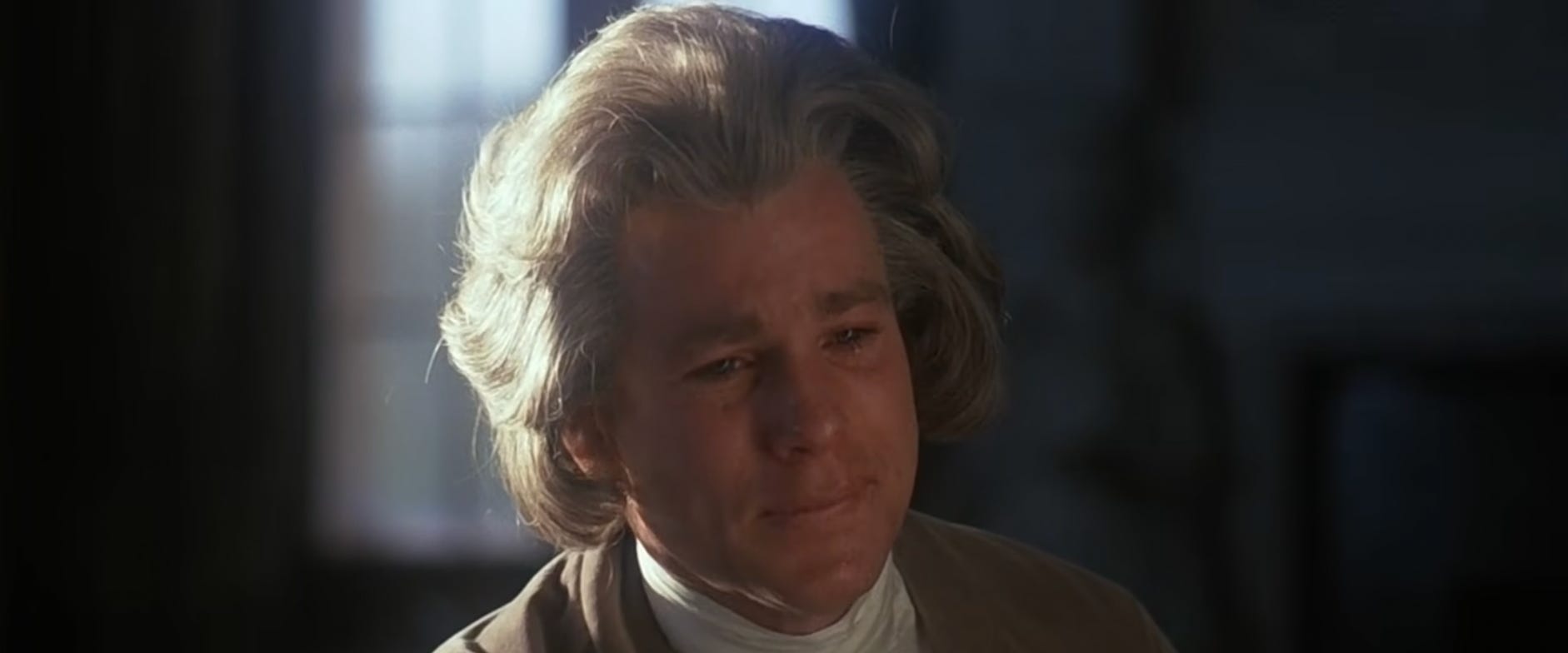
Seeing this on the screen of the GFT’s cinema 1 took me back almost a year to sitting in that exact same screen, watching Barry Lyndon (which I wrote about here). Specifically, it took me back to the moment at which that character’s world also comes crashing down, thanks to his hubris and his insistence on living a fantasy life, which is also shown across the character’s face in a long close up as he sits by his child’s deathbed. In Boogie Nights the change is even more underplayed by the actor, but the effect is still the same: a gut-wrench, a terror, an intense fear that this could happen to you, the viewer, if you take one wrong turn and fail to grasp your many opportunities to turn back.
The scam, of course, goes horribly wrong, though not in the way you are led to expect. It seems, even, that they are going to get away with it, the bodyguard apparently oblivious to the fact his employer has been saddled with a half kilo of baking powder, and the dealer so high on freebase coke he can think of nothing but singing and dancing and playing fast and loose with his own life. But just when Dirk and Reed find the courage to start leaving, Todd, desperately strung out, attempting to find within himself some movie-constructed version of masculinity that relies on violence and pushing his luck, insists that they will not leave without also robbing the dealer, demanding everything from the safe in his bedroom floor. The scene ends with three men dead and the ludicrous drug-fuelled dreams of Dirk and Reed well and truly ended. Having been lucky to get away with his life in tact, Dirk returns to Horner’s house to beg to be allowed to return. This, Dirk realises, is all he now has: this family, this fucked up life, this strange career. There is no fantasy future he can escape to, nor an unproblematic past to which he can return.
Earlier in the film, before Dirk returns to the pornography-making fold, Amber and Rollergirl lament: I miss that kid. The implication is that he was good and pure amidst a sea of moral rot, a shining example of a good boy unsullied, at that point, by everything that would come after. But was he? It was Eddie who first propositioned Jack in the club’s kitchen, having already embarked on a career performing sexually for cash. Similarly Rollergirl, whose refusal to take off her roller boots suggests a desperation to regress to teenagerhood, was already being sexually harassed by classmates before she dropped out. They are harking back to an age of innocence that just did not exist, nostalgic for something that is completely imagined—or, rather, is rose-tinted beyond all recognition, recalled specifically to fit their current narrative needs.
It is this point, of the many I might have taken away from the film, that really got me in the guts this past weekend—a weekend on which black-clad fascists were throwing Nazi salutes on the streets of Glasgow, just as it was announced that Elon Musk has become the planet’s first trillionaire. We all know things are bad, in here. We see the people sleeping on the streets, we hear as our friends lose jobs to supposed AI efficiency (which does not actually seem to exist, outside of it being financially ‘efficient’ to fire a load of people), we know that parents of disabled children struggle at every turn to get the provision required. We watch as friends give up having kids they can’t afford. We see the elderly left abandoned, families going into debt to pay for their care. We struggle to get NHS operations or appointments. We see benefits slashed and slashed. We go to our local supermarkets and see security tags on packets of fish, the cigarettes and alcohol kept behind cages. Work pays less. Costs go up. The richest get richer and richer, astronomically so, unfathomably so, and the rest of us suffer. We are sold either a ludicrous future dream by the rich—one where enormous global prosperity is apportioned fairly thanks to the effects of the very systems that actually, in reality, impoverish us—or a return to an imagined past by the fascist right, in which all our problems can be blamed on ‘immigrants’ (really, meaning anyone not white), who have supposedly caused all the issues we now face; if we just go back to the past, they say, some imagined recent past where people of colour and queer people did not exist and capitalism did not funnel the wages of the workers into the pockets of capitalists, our very real problems would be solved. These are both fantasies, both requiring the enormous exploitation and dehumanisation of the masses, the sharpest end of this focused on the racialised, the displaced, the old, the disabled, the poor, the already marginalised. A trillionaire is crowned and fascists return to the streets, bare faced, throwing Nazi salutes without a care. We are all compromised by this. We, too, are trapped in a bleak reality. There’s no fantasy future we can escape to, nor an unproblematic past to which we can return. How do we escape this trap? By reckoning with our reality, now. By scrapping and fighting and coming together and figuring out a third option, a different path, that considers us all as valuable inherently, all fallible, compromised humans, instead of capitulating to the seduction of past or future lies.
This, too, is how Boogie Nights closes. By the end of the movie all its characters have abandoned their well-worn 70s values and styles and embraced the accoutrements of the new 80s, from Don Cheadle’s desperately authentic Buck giving up his beloved cowboy gear to ‘perform’ the blackness required of him in the rap-soaked advert for his new business, to Dirk, with his new slicked back hair and white, shoulder-padded pure 80s suit, ready to return to porn not as the handsome young miracle but as the been-through-the-mill star of the past. Miraculously, Paul Thomas Anderson manages to create a sliver of hope from the preceding two and a half hours, leaving our characters all trapped, yes, but trapped together, hoping and dreaming and making and exploiting each other and loving each other in just as fucked up a fashion as they ever were before, but with, at least, a little more knowledge, a little more insight, a little bit more awareness of their own mortality, their own fallibility. They know, now, how high the stakes are if they continue to refuse reality. They are glimmers of change: Buck’s baby, with Jessie, and the coming back together of the flawed gang with more humility. Where do they go from here? It’s not entirely clear. But the film ends with an unambiguous bursting of the fantasy the entire film has rested on. Giving himself a pep talk in character, looking at the battered, slightly older, slightly more human version of himself, Dirk Diggler stands up and drops his pants and unsheathes his monstrous talent for all the audience to see. And we see that, yes, it is just a dick. A big dick, yes, but just a penis, at the end of the day. Not enough to build an entire fantasy on. Not even close.
I too missed out on watching this his film. I’ll watch it now! Thanks for this beautifully written reflection on it.
This is one of my favourite films. It's great to read your thoughts about it.